Designing business systems that support and enable our people
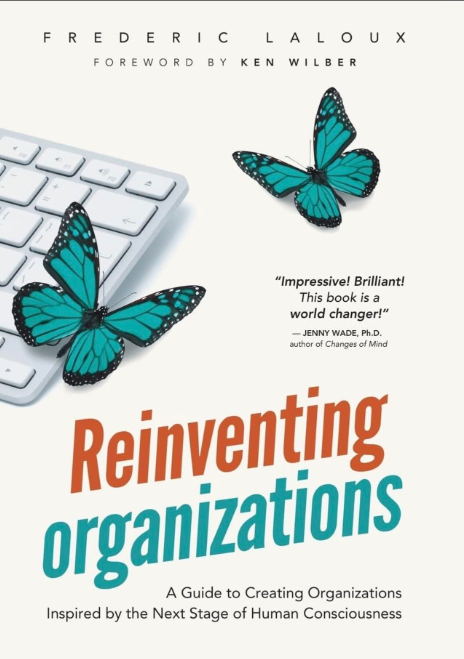
I’ve been reading Frederic Laloux’s work on evolutionary organizations and something clicked.
He has a model of "Teal" organizations that operate from a radical premise: people are fundamentally good.
Not “good when managed properly.”Not “good if you have the right systems.”
Just… good.
They build around three principles:
∙ Evolutionary purpose (the organization serves a mission larger than profit)
∙ Wholeness (people bring their full selves, not just their “professional” mask)
∙ Self-management (trust over control, autonomy over hierarchy)
Here’s what hit me: This is how successful outdoor expeditions happen, and how I lead trips for years. When you’re leading people in the wilderness—real physical risk, real fear, real discomfort—you CAN’T operate from “people are lazy and need to be controlled.” You have to trust that:
∙ They WANT to succeed
∙ They’ll rise to challenges when supported
∙ They’re capable of self-management when given clarity and tools
∙ Resistance is information, not defiance
This language also works in a business context.
These insights are helping me to ask different questions when it comes to automation and AI:
What if we designed systems that assumed people were good?
- Not: “How do we prevent employees from slacking off?”. Instead: “How do we free talented people from soul-crushing repetitive work so they can focus on what they’re uniquely capable of?”
- Not: “How do we monitor and control?”But: “How do we support and enable?”
This isn’t about replacing humans or extracting more productivity from them. It’s about liberating human capacity for the work that actually matters—the transformational, creative, relational work that only humans can do.